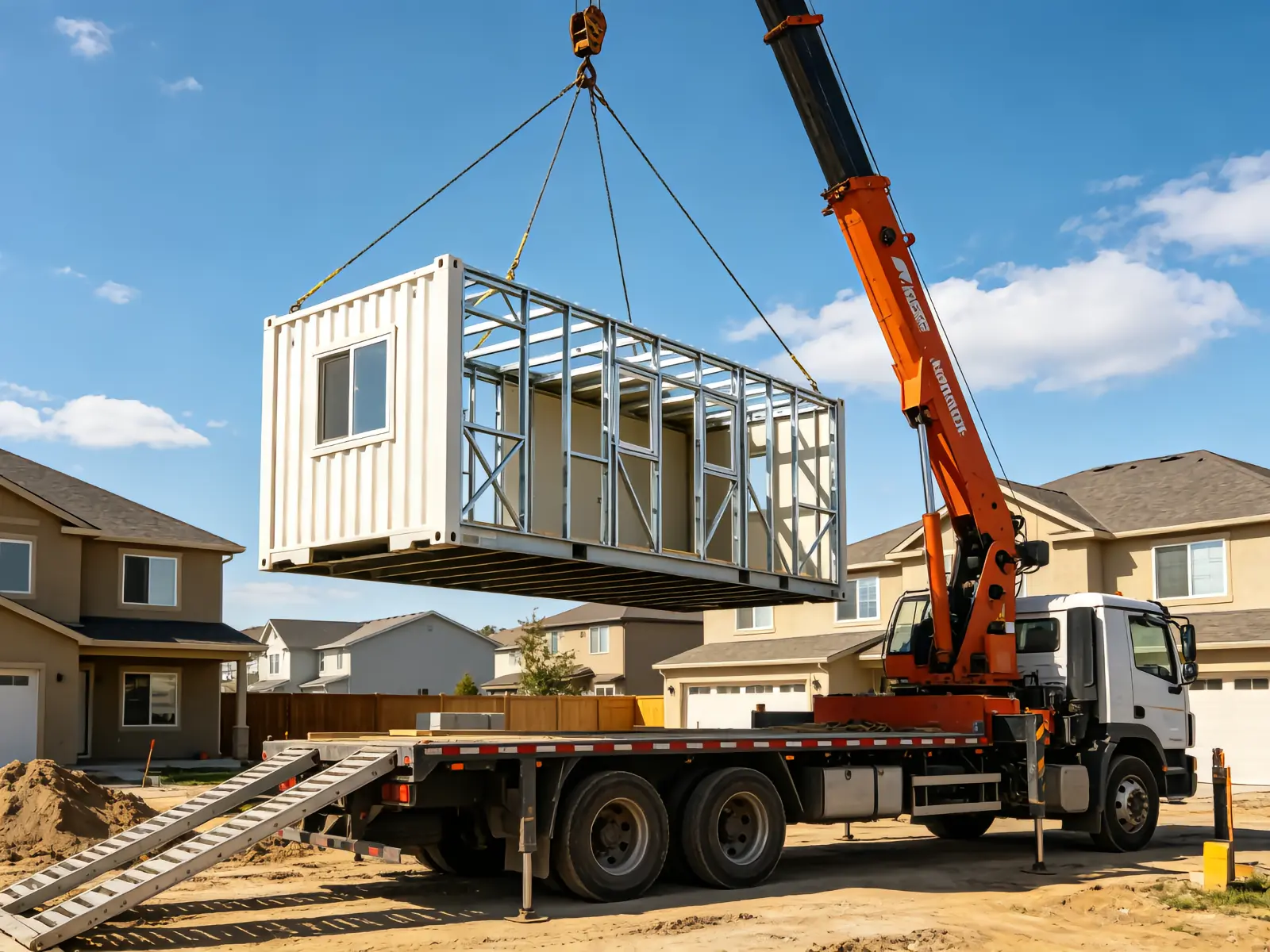
An expandable container house looks like a shipping container on the truck and a proper house on the site. The trick is a folding mechanism that lets the walls and floor open out to roughly double the floor area. Here is how the system works, and what to inspect before you buy.
The folding mechanism
The unit ships as a main box plus folding side sections. On site, the side walls hinge down or out from the main box, the floor panels unfold to cover the expanded footprint, and the roof sections close over — a two-person crew does it in 30–60 minutes without heavy machinery.
Higher-spec units add hydraulic assists; manual units use counterbalanced hinges. Either way the moving parts are steel hinges and locking pins — simple, repairable and easy to inspect.
The steel frame
Quality frames are galvanized Q235 or Q345 steel, fully welded and powder-coated. The frame carries all the load; the wall panels are infill, not structure. Check for rust protection on cut edges and welds — that is where cheap units corrode first.
The walls: what insulation you get
Walls are sandwich panels — EPS, rock wool or polyurethane cores between steel or aluminum faces. 50 mm is the entry point; 75 mm is common for cold climates. Rock wool adds fire resistance; PU gives the best insulation per millimeter. Ask which core is quoted — the price difference is small, the comfort difference is not.
Waterproofing and services
Roofs use lapped steel panels and sealant at the fold lines; a leak test is a standard QC step in good factories. Units arrive pre-wired (switchboard, LED lights, sockets) and can be pre-plumbed for bathroom and kitchen — on site you connect mains water and power and the house is functional the same day.
Quality markers to check before buying
- Steel gauge — thicker frame sections on long spans.
- Hinge and pin quality — the parts that move are the parts that fail.
- Sealant at fold lines — the number-one leak source.
- Test reports — welding, waterproofing, load and unfolding-cycle documentation.
- Warranty in writing — structural warranty, not just a promise.
Get Factory-Direct Pricing
Planning a project? Send us your requirements for a free layout recommendation and factory-direct quote.